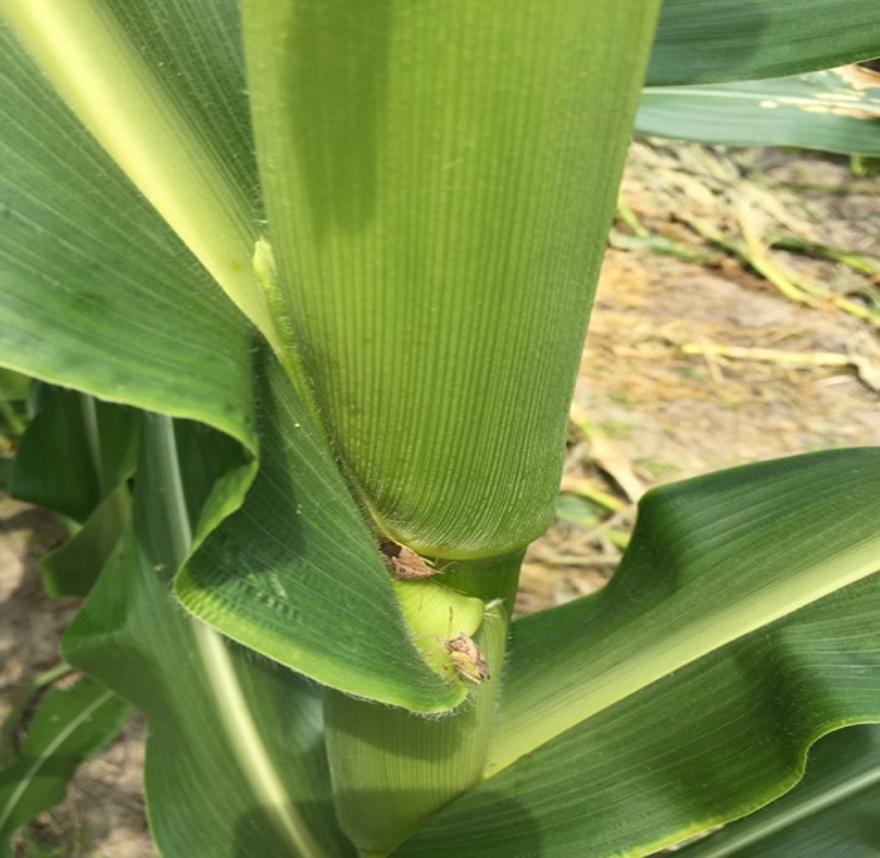
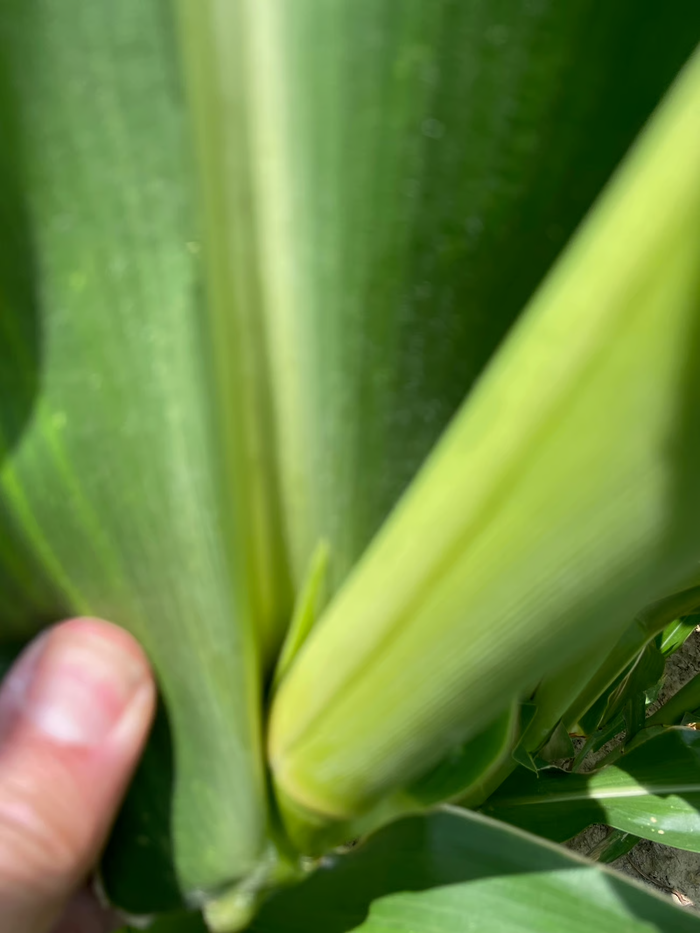
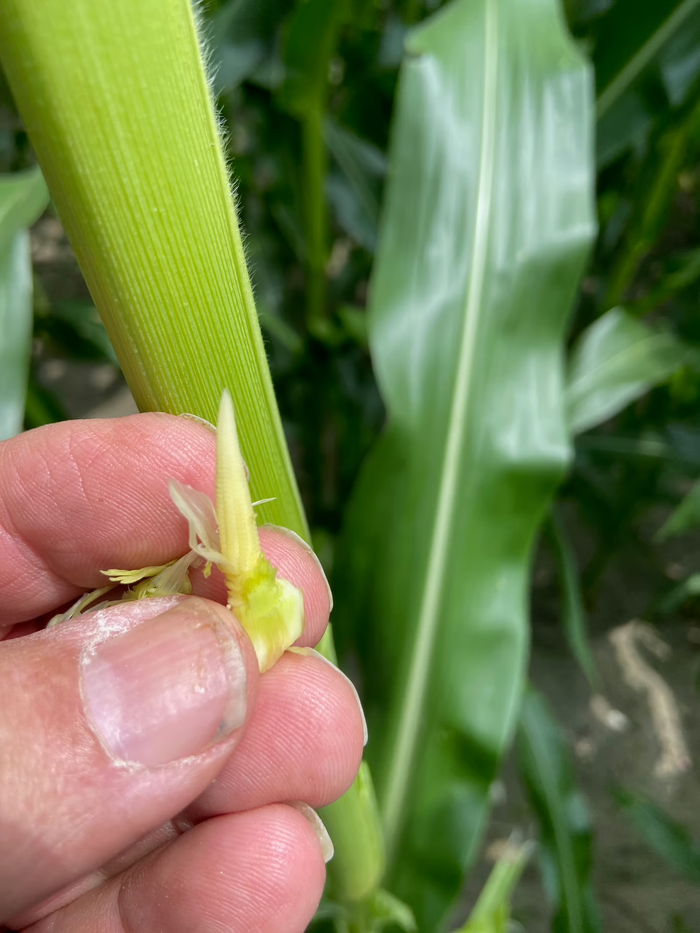
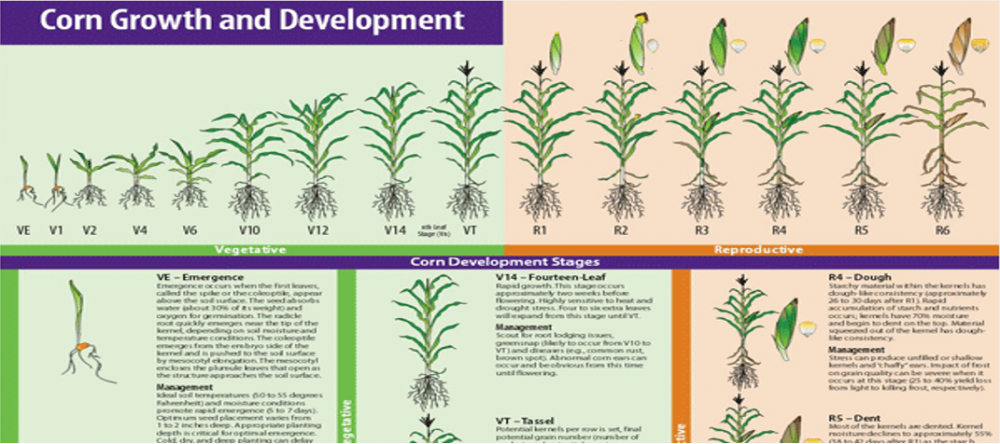
I was out in the field today scouting corn. Growth stages range from V-4 to tassel. In one of the fields I scouted, I pulled down a path between two fields. One side had 37/100 plants, and the other had 28/100 plants. Both fields were above the threshold and across the road from a harvested rye field that had been burned off. These corn fields were at V14. With that said, it is time to review thresholds for stink bugs in corn.
Brown stink bug is the primary pest species of corn in North Carolina, although brown marmorated stink bug, green stink bug, and southern green stink bug can also be pests. They feed through piercing-sucking mouthparts and can cause three distinct types of damage.
Early vegetative stages (V1 to V6)- plants can be stunted, yield-robbing tillers can be formed, or plants can be killed. This damage can easily be confused with billbug damage.
Pre-tasseling stage (V14 to VT) - ears can be crooked (banana ear) and kernels can be missing. This damage can easily be confused with damage from moisture or nutrient stress. See below
Reproductive stage (R1 to R4)- kernel size and weight can be reduced and secondary pathogens can be introduced that lead to aflatoxin or fumonisin contamination.
Where can stink bugs be a problem?
· Corn fields planted in no-till fields with heavy cover. Watch for feeding in open furrows.
· Small Grain/corn interfaces. Stink bugs aren’t pests of small grains, but they will survive on them up to harvest time. Small grain harvest can push stink bugs into nearby corn, but this isn’t guaranteed.
· Corn fields planted behind soybeans. Stink bugs build up in soybeans during the late summer and early fall after harvesting other crops. Check field edges near woods, where stink bugs may have overwintered after building up in last year’s soybeans.
Scouting. Scout corn for stink bugs from V1 through R2. Check all edges first (especially sources like woods, weeds, and other crops) since they concentrate on edges, not field middles. The sampling stops will depend on the number of stink bugs and field size. At each sampling stop, check at least 20 corn plants. Sampling the entire plant is not necessary.
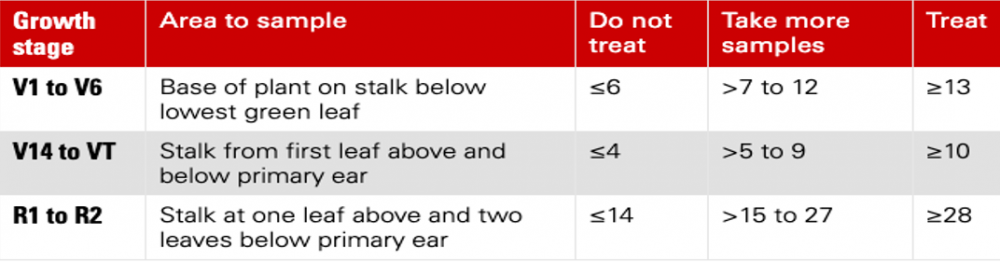
· From V1 to V6, scout the base of the plant on the stalk below the lowest green leaf.
· From V14 to VT, find where the primary ear is located or peel back leaves to see where it is forming. Scout the stalk from the first leaf above and below the primary ear.
· From R1 to R2, scout the stalk at one leaf above and two leaves below the primary ear. Thresholds.
Thresholds vary depending on the growth stage and are based on a 100-plant sample as described below (see table). These thresholds are not percentages but numbers. If a single plant has multiple stink bugs, this must be counted into the total. If the number of stink bugs exceeds the number in the "treat" category, treat the field even if 100 plants have not been sampled. If the number of stink bugs per plant falls between the "treat" and the "do not treat" category, take more samples until a confident decision can be made.
Alternatively, if the entire plant is sampled, thresholds are 1 per 10 plants (V1 to V6), 1 per 8 plants (V14 to VT), and 1 per 4 plants (R1 to R2).
Insecticide control. Many insecticides in the pyrethroid class are effective for brown stink bug in corn. However, bifenthrin is the most effective both because it can be applied at a rate that contains more active ingredients than other pyrethroids and because it is more toxic to brown stink bugs. Expect only a week's residual.
Two critical factors in achieving control are:
· Coverage: Deliver insecticide where the stink bugs are located. Ensure canopy penetration with proper nozzle, pressure, and volume selection.
Timing- the most critical time to treat from V14 to VT is just before the primary ear is exposed. Aim to control stink bugs when the primary ear is between these stages, but preferably on the early side to avoid banana ears.