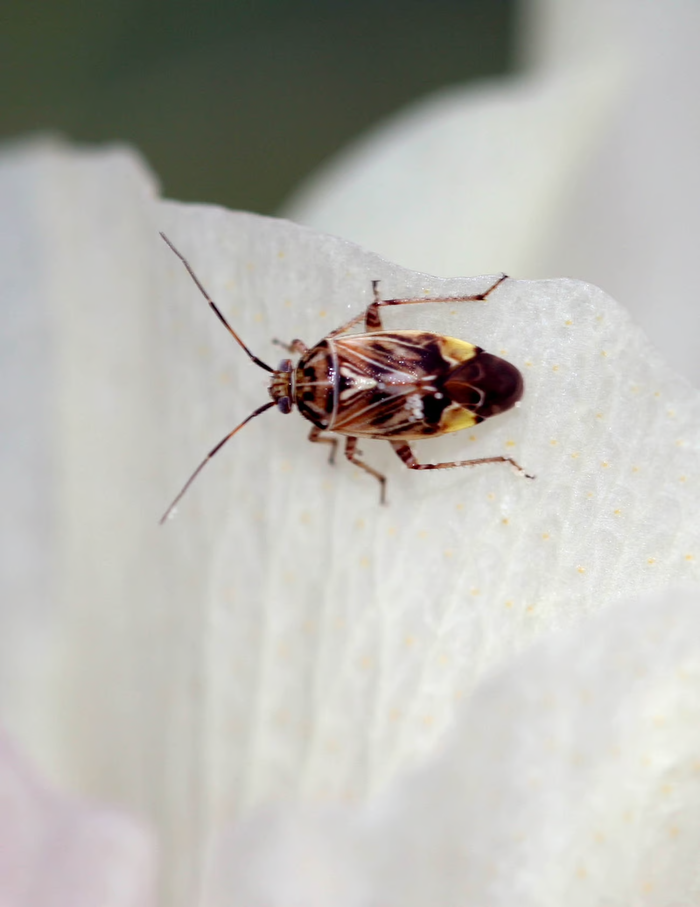
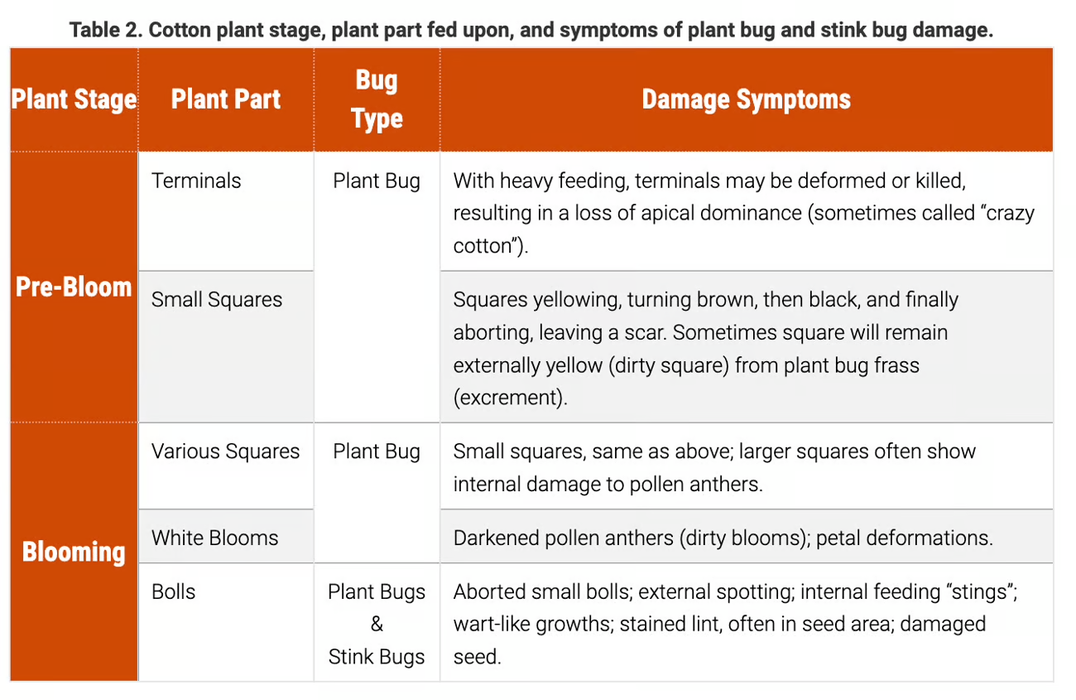
Start scouting cotton in 2024. Before cotton blooms, tarnished plant bugs, or Lygus, damage the crop by feeding in tender terminals and, more commonly, directly on small squares with their needle-like mouthparts, causing the squares to abort. When blooming begins, plant bugs continue to feed on the smaller squares, larger squares, and even small bolls. Tarnished plant bugs feeding on large squares just before opening cause“dirty blooms” (white blooms with darkened pollen anthers and sometimes with small circular deformities on the petals). Tarnished plant bug feeding on small to medium-sized bolls up to approximately 10 to 12 days old may cause stink-bug-like external boll spotting and internal boll damage, such a callous growth (warts), deformed or rotted fruit, or small boll abortion. This boll damage is identical to that caused by stink bugs. Plant bug damage has become more widespread in recent years, particularly in eastern counties. Plant bugs are capable of causing all of the damage symptoms described in Table 2.
2024 Regional Insecticide Recommendations for Plant Bugs
Tarnished Plant Bug Thresholds
Pre-bloom: Tarnished plant bug sweeping advised where retention of young terminal and lateral squares in pre-bloom cotton is less than 80 percent.
- 8* plant bugs per 100 sweeps (from initiation of squaring until the first or second week of blooming) AND <80% square retention.
*The sweep net threshold may be raised to 10 if fruiting begins on node 4 through 6, or lowered to 6 or 7 if fruiting has begun on node 8 or higher. Thresholds also may be lowered somewhat in stressed cotton.
Post-bloom: Post-bloom thresholds begin approximately 1 to 2 weeks after bloom initiation.
- 2-3** adult plus nymph stage plant bugs per 5 row feet taken from 6 to 8 locations in the field.
** Use 2.5 foot black beat cloth between two adjacent cotton rows.
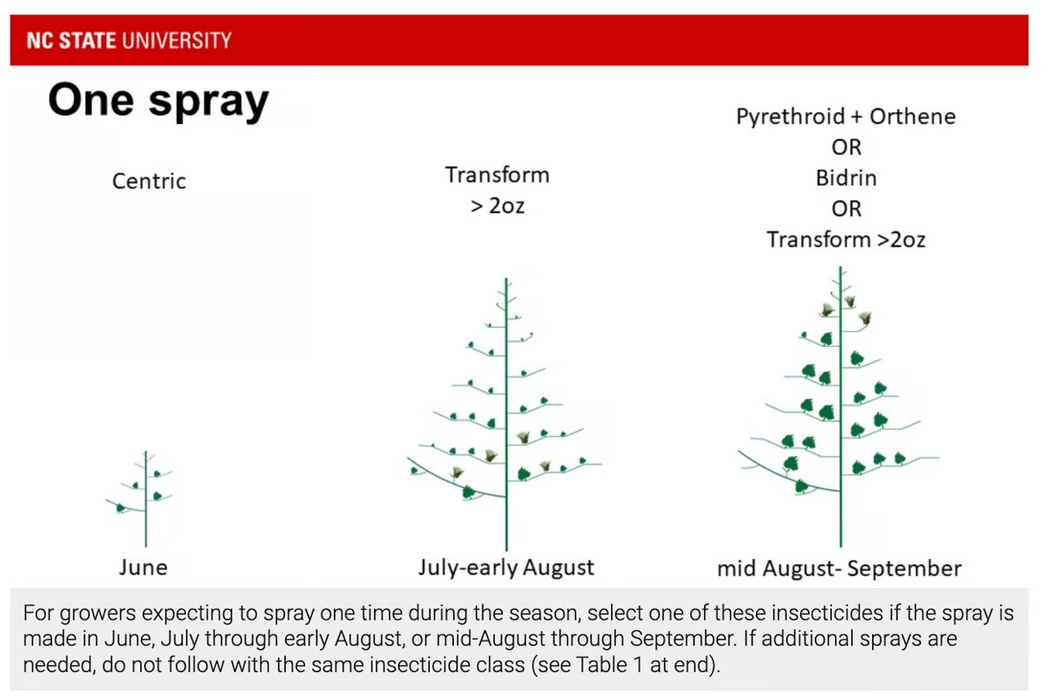
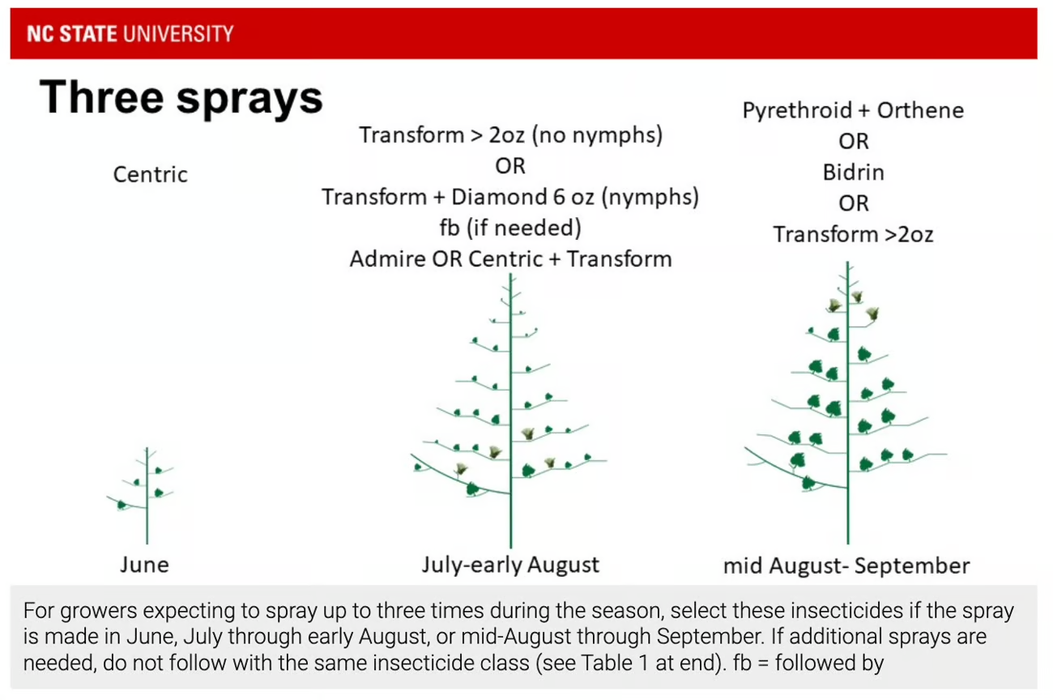
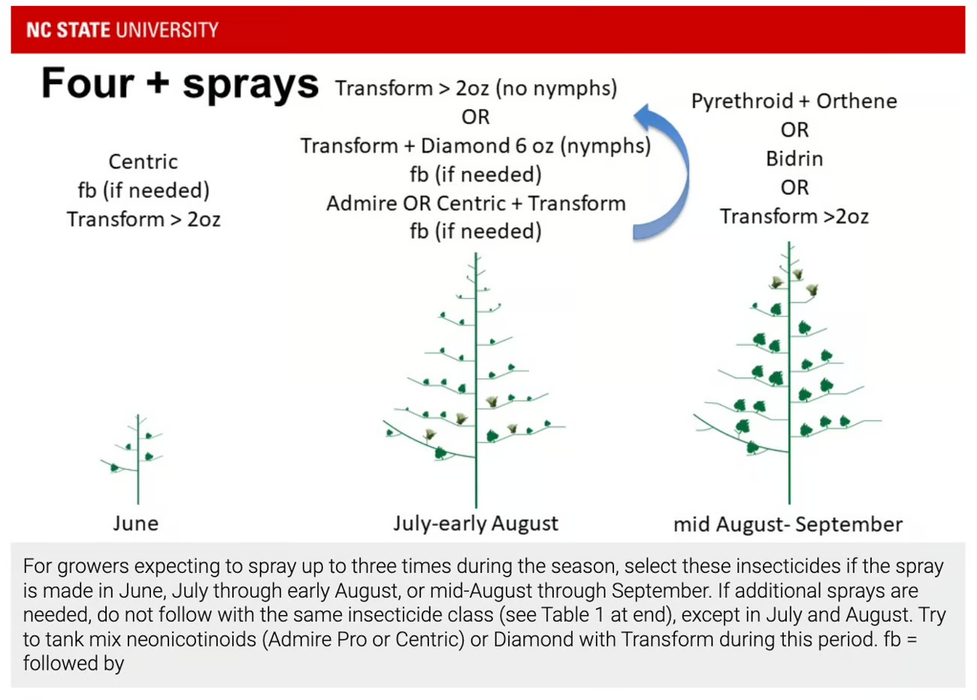
*** Before you spray for tarnished plant bug in cotton, be sure you have reached the economic threshold.
Join our mailing list!
Enter your email address to receive updates.
Written By

More About